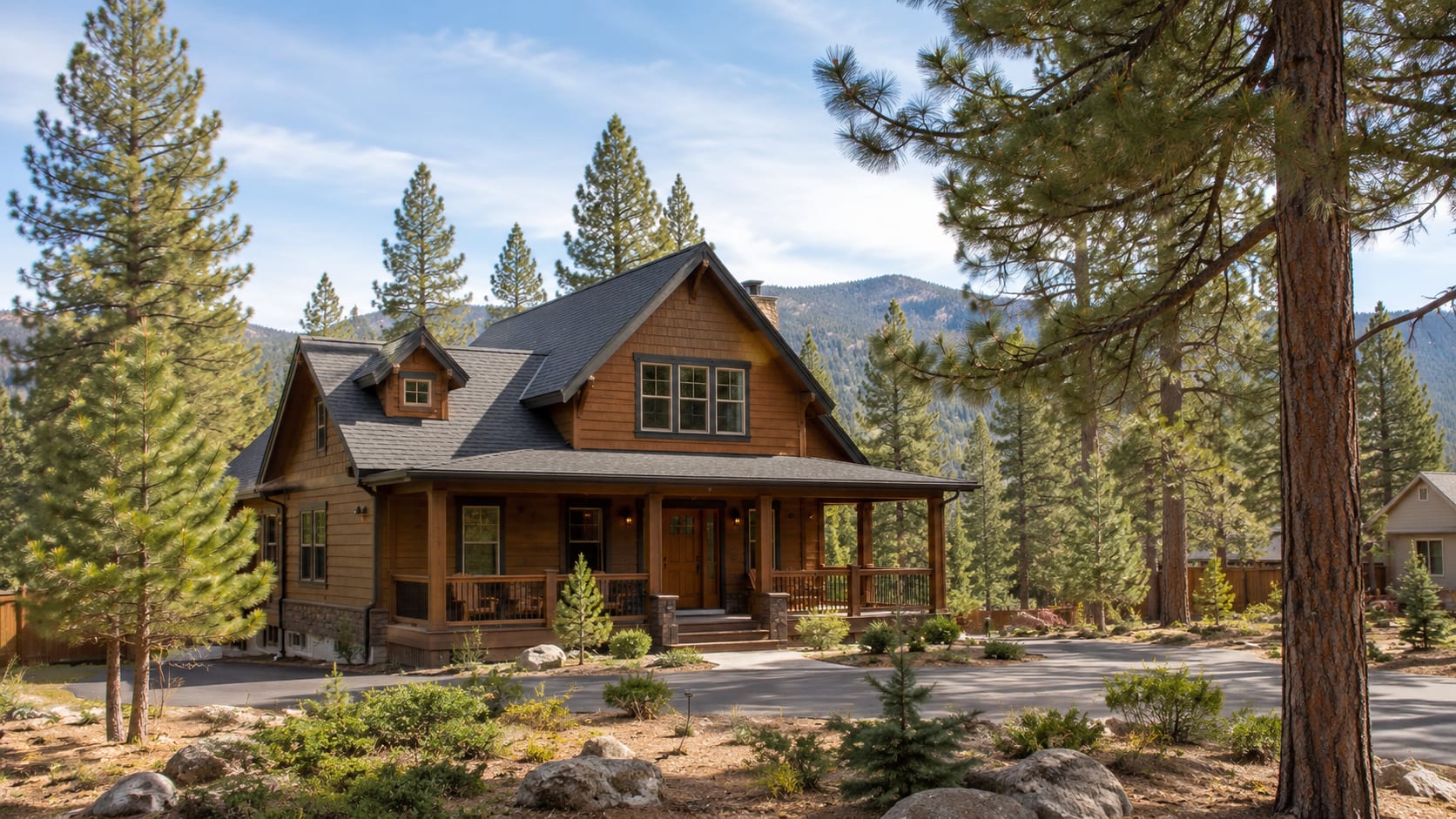
A hillside home with a great view may be one of the most desirable properties in the neighborhood.
It may also be more expensive to insure.
That creates an interesting question for Orange County buyers and sellers:
Can wildfire risk affect what a home is worth?
The answer is potentially yes, but not in a simple or predictable way.
Wildfire exposure can affect insurance costs, buyer demand, financing and future resale. At the same time, many homes near hillsides and open space command premium prices because buyers value their views, privacy, larger lots and location.
The real issue is whether the property's benefits outweigh the additional costs and risks in the eyes of buyers.
Wildfire Risk Is Different From Property to Property
Orange County includes everything from flat suburban neighborhoods to homes next to hillsides, canyons and natural open space.
Two homes in the same city can have very different wildfire exposure.
Buyers can review general wildfire information through CAL FIRE's Fire Hazard Severity Zone maps and resources from the Orange County Fire Authority.
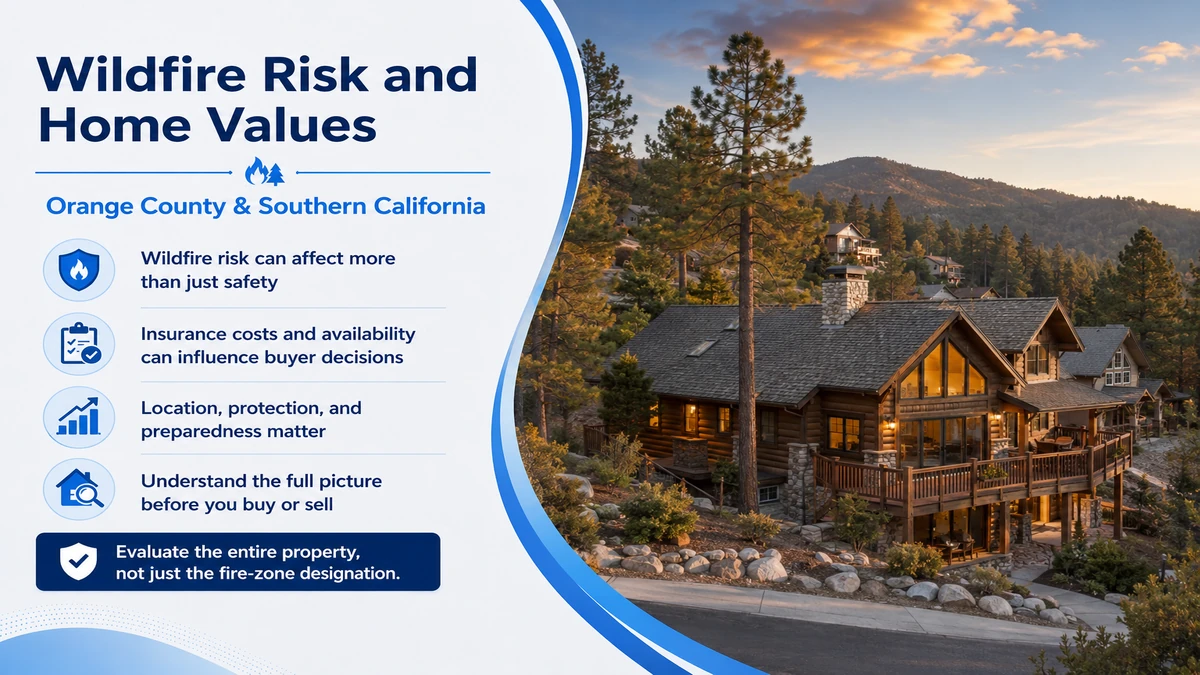
But a fire-zone designation is only one part of the picture.
A buyer may also consider:
- Distance from brush or open space
- Terrain
- Vegetation
- Defensible space
- Roof and construction materials
- Access and evacuation routes
- Insurance availability
- Insurance cost
This is why wildfire risk should generally be evaluated at the individual property level, not simply by city or neighborhood.
Can Wildfire Risk Lower a Home's Value?
Potentially.
Home values are ultimately determined by what buyers are willing to pay.
Imagine two similar homes.
Home A
The property is in an established suburban neighborhood with relatively straightforward insurance options.
Home B
The property backs to open space and has more wildfire exposure.
Home B may also have a better view, more privacy or a larger lot.
Some buyers may prefer Home B despite the added risk.
Others may prefer Home A because it is easier and less expensive to own.
If enough buyers favor one type of property over another, that difference can eventually affect market value.
But there is no reliable formula such as:
High fire risk = 10% lower home value
Real estate does not work that neatly.
The property's location, condition, features, insurance costs and current market demand all matter.
Insurance Is Often Where Wildfire Risk Becomes a Financial Issue
For many buyers, wildfire risk becomes more real when they begin getting homeowners insurance quotes.
Consider two otherwise similar homes.
Home A
Annual homeowners insurance:
$2,000
Home B
Annual homeowners insurance:
$6,500
Difference:
$4,500 per year
or about:
$375 per month
That additional cost can change how a buyer compares the properties.
Over ten years, the difference would be $45,000 if premiums remained unchanged.
Of course, insurance premiums rarely stay exactly the same for ten years. The point is simply that even a few hundred dollars per month can become meaningful over time.
Buyers may also wonder:
Will the premium increase?
Will I have fewer insurance options in the future?
Will another buyer worry about the same issue when I eventually sell?
Those questions can influence demand.
For more on the broader insurance issue, see How California Home Insurance Is Affecting Home Sales.
A Common Orange County Buyer Decision
Consider a buyer comparing two homes in roughly the same price range.
One is in a traditional suburban neighborhood.
The other backs to a hillside and open space.
At first, the buyer prefers the hillside home because of the view and privacy.
Then the buyer gets an insurance quote.
Coverage for the hillside property is substantially more expensive than expected.
The buyer does not necessarily eliminate the home.
Instead, the decision becomes:
Better view + more privacy
versus
Higher insurance cost + more uncertainty
That is often how wildfire exposure affects a real estate decision.
It does not necessarily make a home undesirable.
It simply becomes another factor in determining what that property is worth to that particular buyer.
Desirable Hillside Homes Can Still Sell for Premium Prices
Wildfire exposure does not erase the value of a desirable property.
Buyers may willingly pay more for:
- Views
- Privacy
- Larger lots
- Hillside locations
- Gated communities
- Access to trails or open space
- A particularly desirable neighborhood
In some Orange County communities, those are exactly the features buyers are seeking.
A home with higher insurance costs could still be worth substantially more than a home without those features.
That is why wildfire exposure should not be considered in isolation.
A home's value comes from the combination of:
Location + Condition + Features + Ownership Costs + Buyer Demand
Wildfire and insurance are parts of that equation, not the entire equation.
Could Wildfire Risk Affect Future Resale?
It can.
A buyer purchasing a home today may eventually become the seller.
If insurance is expensive or difficult to obtain now, a buyer may reasonably wonder whether future buyers will face the same issue.
That does not mean the property will become difficult to sell.
But resale is one reason buyers may pay attention to:
- Insurance availability
- Current insurance costs
- Fire-zone designations
- Home-hardening improvements
- Defensible space
- Changes in the insurance market
A property that is easier to insure may appeal to a broader group of buyers.
A property with higher wildfire exposure may appeal to a smaller group, but those buyers could still value its location or features enough to pay a premium.
What Should Buyers Investigate?
If you are considering a home near hillsides, brush or open space, try to understand the issue before making final decisions about the property.
Consider:
- Getting a homeowners insurance quote early
- Reviewing the property's general fire-zone designation
- Looking at vegetation and defensible space
- Considering roof and construction materials
- Looking at access and evacuation routes
- Including insurance in the monthly ownership cost
- Comparing the home with alternatives in the same price range
If traditional homeowners insurance is difficult to obtain, buyers may also need to investigate the California FAIR Plan or other available options.
The goal is not to avoid every property with wildfire exposure.
It is to understand what you are buying.
What Should Sellers Know?
Sellers in wildfire-exposed areas should also understand how buyers may view the property.
Questions may come up about:
- Current insurance
- Previous non-renewals
- Roof age
- Fire-zone designation
- Defensible space
- Vegetation
- Home-hardening improvements
A seller who understands these issues before listing is better prepared to answer questions during the transaction.
Improvements such as roof upgrades, vegetation management or other home-hardening work may also help buyers feel more comfortable with the property, although they do not guarantee insurance availability or pricing.
Wildfire Risk Is One Part of the Value Equation
A home near a hillside is not automatically worth less.
A home outside a wildfire area is not automatically the better investment.
Real estate is more complicated than that.
One buyer may decide:
The view, privacy and location are worth the higher insurance cost.
Another may decide:
I would rather have lower ownership costs and less uncertainty.
Those differences in buyer preference are what can eventually influence market value.
For buyers, the important step is understanding the property's insurance and wildfire considerations before deciding how much the home is worth to you.
For sellers, it means understanding that buyers may compare the property's benefits with the additional cost and risk of ownership.
You can explore more Orange County housing analysis through Legacy Real Estate Insights.

Legacy Real Estate does not provide insurance, legal or wildfire-safety advice.