
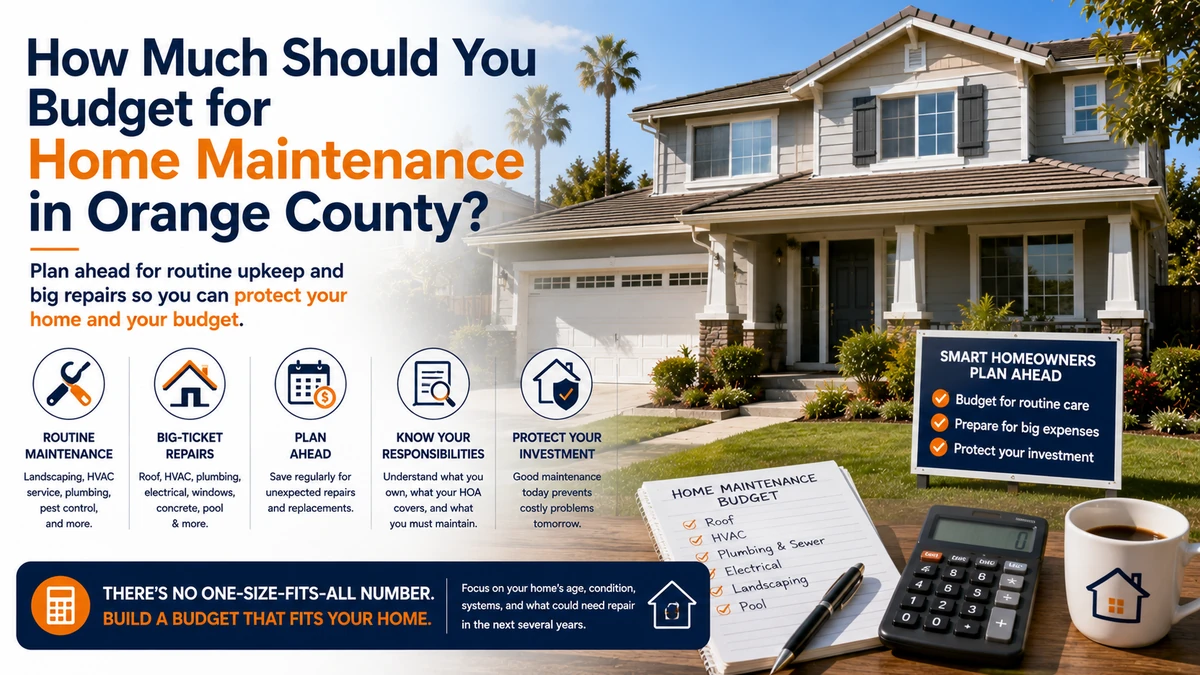
There is no single percentage that tells you how much an Orange County homeowner should budget for maintenance.
A newer townhome where the HOA maintains much of the exterior can require a very different personal maintenance budget from an older detached home with aging plumbing, a pool, and a large yard.
The better approach is to look at the actual property, its major systems, and what you are responsible for maintaining.
For a broader look at repairs, insurance, HOA dues, taxes, and other ownership expenses, see The True Cost of Owning a Home in Orange County.
Why the 1% Maintenance Rule Is Limited
You may have heard that homeowners should save around 1% of their home's value each year for maintenance.
It is a useful reminder that homes require ongoing spending, but it can be misleading in a high-cost market like Orange County.
A $1.2 million home does not necessarily cost twice as much to maintain as a similar $600,000 house somewhere else. Much of the difference in value may come from land, location, schools, and local housing demand.
Maintenance costs are driven more directly by:
- Size and condition
- Age of major systems
- Construction
- Labor and materials
- Pool and landscaping
- Exterior features
- HOA responsibilities
Instead of starting with the home's price, start with what could actually need repair or replacement.
Budget for Routine Maintenance and Big Replacements
Home expenses generally fall into two categories.
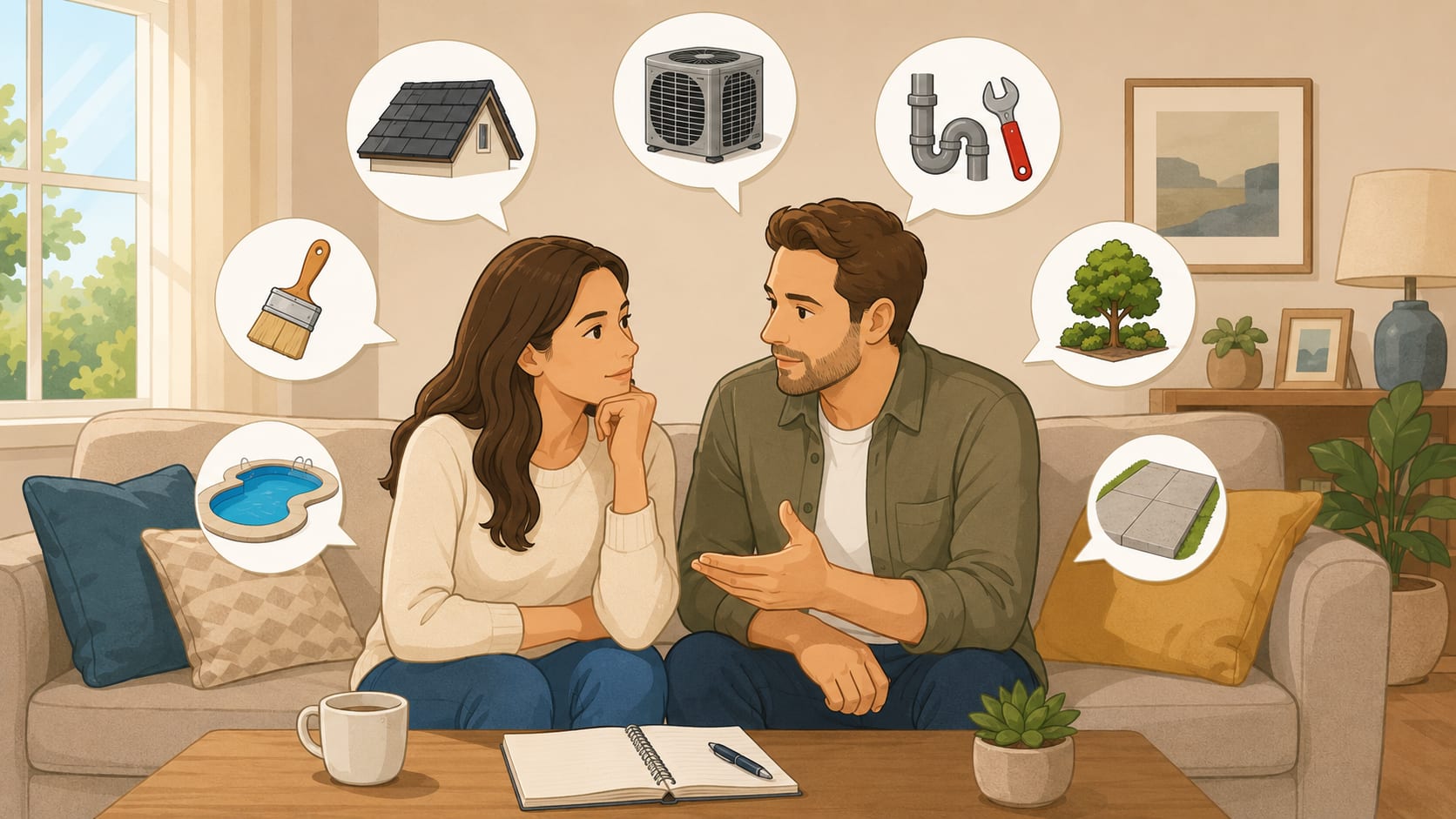
Routine maintenance can include landscaping, HVAC servicing, pest control, pool service, irrigation repairs, drain cleaning, minor plumbing, and general upkeep.
Larger expenses happen less frequently but can include:
- Roof replacement
- HVAC equipment
- Plumbing or sewer work
- Electrical work
- Water heaters
- Windows
- Exterior painting
- Concrete
- Fencing and retaining walls
- Pool equipment
A realistic maintenance budget needs to account for both.
The fact that a roof or sewer line does not generate a monthly bill does not mean it should be ignored until something fails.
Build a Property-Specific Maintenance Budget
A better method is to inventory the major parts of the house.
Start with:
- Roof
- HVAC
- Plumbing and sewer
- Electrical
- Water heater
- Windows and doors
- Exterior surfaces
- Driveway and hardscape
- Landscaping and irrigation
- Pool, if applicable
Then ask:
What has already been replaced?
What is older but still functioning?
What does the inspection identify?
What has the seller disclosed?
What does the HOA maintain?
What significant expenses could reasonably arise over the next several years?
You do not need to predict exactly when something will fail. You are trying to identify the expenses large enough that you should prepare for them.
Concrete Is Easy to Overlook
Concrete is one expense we have seen increase substantially.
In our Orange County experience, a driveway project that might have cost around $3,000 about ten years ago can be closer to $8,000 today for comparable work.
That is not an Orange County average. Scope, demolition, reinforcement, drainage, site access, and finish can materially change the price.
But concrete matters beyond driveways.
It can be involved in:
- Patios
- Walkways
- Block walls
- Retaining walls
- Drainage projects
These are expenses buyers can easily overlook while concentrating on the kitchen, bathrooms, and interior condition.
A Real Anaheim Sewer Example
We had an Anaheim transaction where the sewer line had significant tree-root intrusion.
The buyer negotiated approximately $20,000 in seller credit.
At the time, the buyer had an estimate of roughly $8,000 to line the sewer pipe.
The work was not completed.
About three years later, the roots had progressed and the pipe collapsed. The owner ultimately spent approximately $22,000 to excavate and repair it.
That does not mean every root intrusion will end the same way.
The lesson is that maintenance budgeting also requires deciding whether a known problem should be handled now or allowed to remain.
Sometimes postponing work is reasonable.
Sometimes it makes the eventual project substantially more expensive.
Water, Landscaping, and Large Lots Matter Too
Large yards can be more expensive than buyers expect.
Potential recurring expenses include:
- Water
- Gardening
- Irrigation repairs
- Tree trimming
- Fencing
- Drainage
- Hardscape maintenance
Water management around the house also deserves attention.
Overwatering, drainage problems, leaks, and water collecting near the structure can contribute to property-condition problems. Gutters and properly functioning drainage can also become important during heavy rain.
A large lot may be one of the home's best features.
It simply needs its own maintenance budget.
Older Homes Require a Closer Look, Not Automatically a Bigger Budget
An older home is not automatically more expensive to maintain.
A 1960s house might already have:
- A newer roof
- Updated plumbing
- Updated electrical
- Newer HVAC
- Replaced windows
while a much newer property might still have several original components nearing replacement.
That is why the year built is less important than what has been maintained and replaced.
The same is true when comparing similarly priced homes. One may have few significant expenses approaching, while the other could have older plumbing, deteriorated concrete, foundation concerns, or outdated electrical equipment.
HOA Properties Change the Maintenance Calculation
Condos and townhomes can shift some expenses from the individual homeowner to the association.
An HOA may maintain some combination of:
- Roof
- Exterior
- Landscaping
- Pool
- Common plumbing
- Private streets
- Structural components
But never assume what the HOA maintains based solely on the property type.
The owner may still be responsible for HVAC, appliances, interior plumbing, windows, doors, or other components depending on the governing documents.
Before buying, review the HOA financials and determine what the association actually maintains.
HOA dues also do not eliminate future maintenance risk. An association can still increase dues or levy special assessments when major expenses arise.
That is why underfunded HOA reserves can materially affect the cost of ownership.
Pools Deserve Their Own Budget
A pool creates both recurring and irregular expenses.
These can include:
- Cleaning and chemicals
- Water and electricity
- Pumps and filters
- Heaters
- Leaks
- Resurfacing
- Safety equipment
Some expenses happen every month. Others may not appear for years.
Treat the pool as its own property system rather than assuming it is included in a generic home-maintenance number.
Turn Future Repairs Into an Annual Reserve
One useful way to plan is to take known or reasonably anticipated projects and spread them over time.
Suppose you obtain a current estimate of:
$8,000 for a driveway
and expect to address it within approximately four years.
That works out to roughly:
$2,000 per year
in reserve planning.
If another $8,000 project may need attention within two years, that could suggest another:
$4,000 per year
The numbers are examples, not standard maintenance costs.
The method is what matters:
Expected project cost ÷ approximate years until needed = annual reserve target
Add that to the amount you expect to spend on normal recurring maintenance.
Two Similar-Priced Homes Can Have Very Different Costs
Consider two hypothetical $1 million properties.
Older detached home
- No HOA
- Older HVAC
- Large yard
- Mature trees
- Older driveway
- Owner responsible for roof and exterior
Newer townhome
- Monthly HOA
- Newer HVAC
- Smaller outdoor area
- HOA maintains some exterior components
- Less direct landscaping responsibility
The detached homeowner may need a larger personal repair reserve.
The townhome owner may have more predictable monthly HOA expenses.
Neither is automatically cheaper.
The important question is:
Who is responsible for maintaining what, and what major expenses are approaching?
Keep Maintenance Separate From Remodeling
Maintenance keeps the house functioning.
Remodeling changes something because you want it to look or function differently.
Repairing a leaking shower is maintenance.
Replacing a perfectly functional bathroom because you dislike the finishes is remodeling.
Keeping those budgets separate gives you a much clearer picture of what the home actually costs to own.
Maintenance Planning Should Start Before You Buy
A buyer can comfortably qualify for the mortgage and still be stretched by the property itself.
If almost all available cash goes toward the down payment and closing costs, an HVAC failure or major plumbing repair shortly after closing can become difficult to absorb.
That is why maintenance belongs in the buying budget, not just the homeowner budget.
Buying a Home in Orange County: What Buyers Should Know explains how property condition fits into the broader buying decision.
Before Setting Your Maintenance Budget, Ask:
- How old are the major systems?
- What has already been replaced?
- What does the inspection identify?
- What has the seller disclosed?
- What does the HOA maintain?
- Does the property have a pool?
- How much landscaping is involved?
- Are there major concrete, drainage, or exterior needs?
- What large projects could arise within the next five to ten years?
- How much cash do you want available when something unexpected happens?
Those answers will usually produce a much more useful budget than simply multiplying the home's value by 1%.
Legacy Real Estate Insights
For more Southern California housing data, ownership-cost analysis, and real estate trends, visit Legacy Real Estate Insights.
Comparing the Costs of Different Homes?
Before buying, Legacy Real Estate can help Orange County buyers compare the condition of major systems, HOA responsibilities, likely upcoming repairs, landscaping and pool expenses, and the overall ownership costs of different properties.
There is no perfect maintenance number for every home.
The better goal is to understand what this particular property is likely to require and whether those expenses comfortably fit your budget.

Legacy Real Estate does not provide inspection, engineering, contracting, insurance, legal, tax, or financial advice.